The Cloned VIN Checklist Every Canadian Dealer Should Be Using for Every Appraisal
Over 372,000 vehicles on Canadian roads may carry a fraudulent VIN. Many of them are moving through auction lanes and trade-ins right now — and most will pass a standard history check without raising a single flag.
That's the problem VIN cloning creates for dealers. The re-VINed vehicle sitting in your appraisals doesn't look stolen. The paperwork is convincing. The history report comes back clean. And by the time police identify it, the unit is gone and compensation to your dealership is $0.
That's why we built the free Cloned VIN Detection Checklist.
What Is VIN Cloning?
Every vehicle has a unique Vehicle Identification Number — the car's fingerprint. In a VIN cloning scheme, criminals steal a vehicle, find a similar legitimate vehicle that has been exported out of Canada, and copy that exported VIN onto the stolen unit — swapping the plate, door jamb sticker, and paperwork.
Because the VIN belongs to a real, legitimate vehicle, it decodes correctly. A standard history report comes back clean. The vehicle looks completely fine on paper — which is exactly why the scheme works.
For a full breakdown of how VIN cloning works and why standard checks miss it, read our earlier guide: VIN Cloning in Canada: What Every Dealer Needs to Know in 2026.
How Big Is the Problem?
The Équité Association's 2025 Auto Theft Trend Report confirmed an 18% national year-over-year decrease in vehicle theft — but organized crime is adapting, not retreating:
- Ontario's vehicle recovery rate was just 51% in 2025 — roughly half of all stolen vehicles were never recovered, meaning many have been re-VINed and re-entered the market
- Vehicle finance fraud at the ports of Montreal and Halifax increased 72% year-over-year
- Auto theft still costs Canadians $900 million annually
The raw theft numbers are improving. The fraud infrastructure built around those thefts is still very much active.
What Happens If You Get It Wrong
When police identify and seize a re-VINed vehicle from your lot, compensation to the dealer is $0. The unit is gone. Insurance coverage is denied. Depending on the timeline, you may also face legal exposure to any customer who purchased the vehicle from you.
OMVIC's own director of enforcement has confirmed it "absolutely" happens that dealers are duped — calling these "very elaborate frauds that can fool even experts in the marketplace."
The Free Checklist
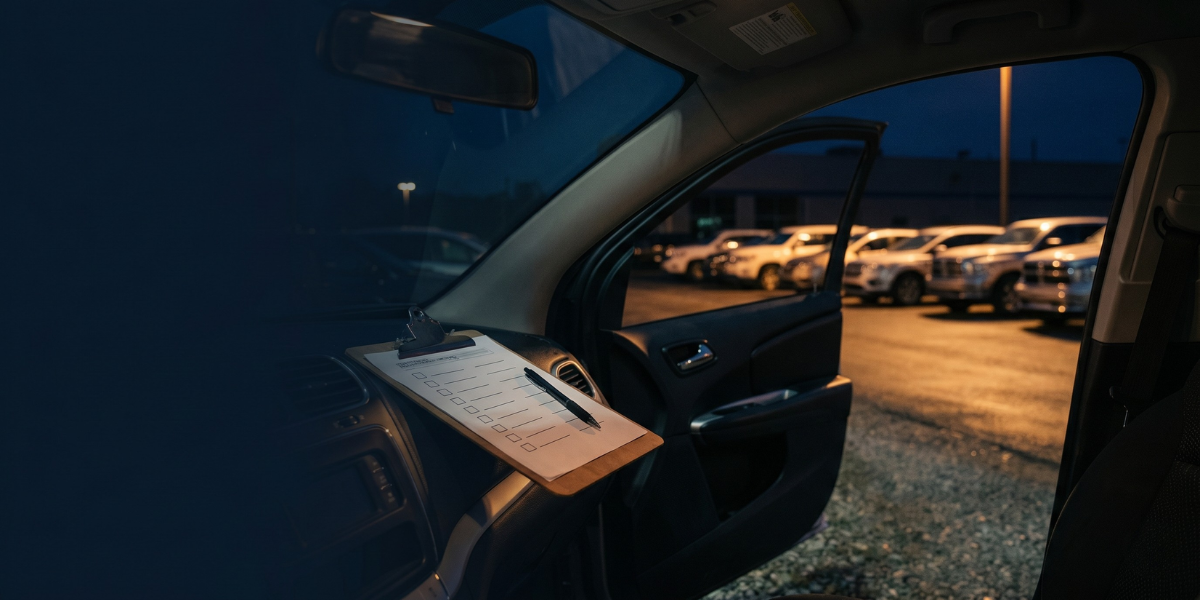
We put together a free one-page appraisal checklist covering the seven steps every dealer should run before accepting a trade-in or auction unit — including the two checks that standard history reports miss entirely.
It's printable, designed for black and white, and built to be kept at the appraisal desk.